The Saga of Tanya the Evil Light Novel: Deconstructing a Military Isekai Masterpiece
Beyond the loli uniform and magical explosions lies one of the most philosophically dense and meticulously researched light novel sagas of the 21st century. This is not just another isekai—this is Youjo Senki.
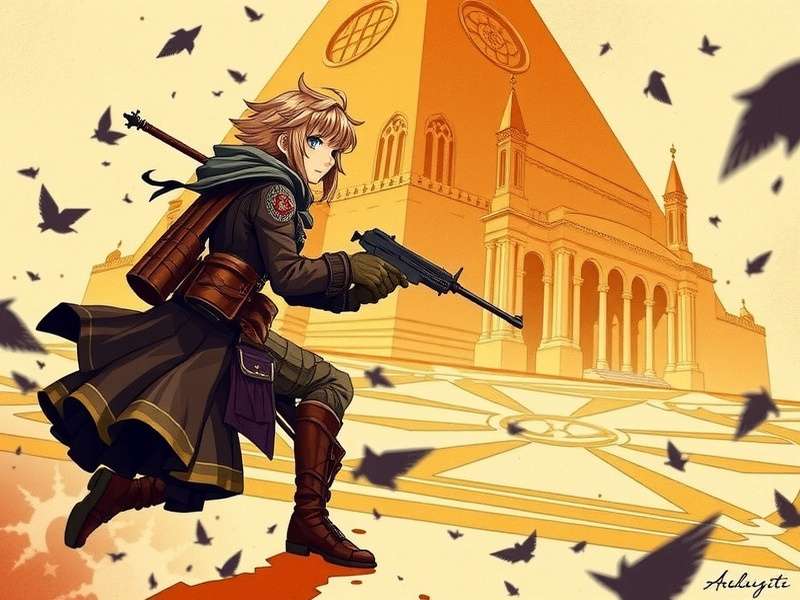
📖 The Genesis of a Saga: What Makes This Series Tick?
When Carlo Zen penned the first volume of Saga of Tanya the Evil (Youjo Senki), he unleashed a narrative beast that defied genre conventions. At its core, it's a double isekai: a ruthless Japanese salaryman, atheist to the bone, is killed and reborn by a self-proclaimed "God" into the body of a young girl in an alternate, magic-infused version of early 20th-century Europe. This isn't a power fantasy; it's a survival manifesto.
The series, often abbreviated as the Tanya Saga, masterfully blends military history, economic theory, and theological debate with blistering aerial combat. The light novel's density is its trademark; pages are filled with tactical diagrams, organizational charts, and internal monologues that would make a philosopher sweat.
"The existence of God is incompatible with the existence of a salaryman who remembers his past life. Therefore, I must deny Him. It's only logical." — Tanya Degurechaff, Vol. 1
⚡ Character Deep Dive: The Monster in a Child's Skin
Tanya Degurechaff, aka the "Devil of the Rhine," is a protagonist for the ages. She is not a hero. She is a hyper-rational, efficiency-obsessed sociopath wearing the face of a blonde, blue-eyed little girl. Her drive is not to save the world, but to secure a comfortable rear-echelon position far from the front lines—a goal her relentless competence continuously sabotages.
Then there's Being X, the antagonistic deity. This is not a benevolent guide but a petulant entity seeking worship through coercion. Their battle is the saga's philosophical spine: human rationality vs. divine tyranny.
🗺️ The World of Youjo Senki: A Historian's Playground
The Imperial Nation (a stand-in for Imperial Germany) is not portrayed as inherently evil. The saga's brilliance is in showing a nation sliding into total war due to complex geopolitical entanglements, resource scarcity, and strategic miscalculations—mirroring real-world WWI dynamics with eerie accuracy, plus computation orbs and mage battalions.
🧠 Exclusive Analysis: The Unseen Themes of the Saga
Most reviews scratch the surface. Let's go deeper. The Saga of Tanya the Evil is a scathing critique of Weberian bureaucracy and the iron cage of rationality. Tanya, the ultimate rational actor, is constantly defeated by the irrational human elements of faith, emotion, and tradition. Her failure is the failure of pure logic in an illogical world.
Furthermore, the series' treatment of war is neither glorifying nor simplistically pacifist. It presents war as a systemic outcome, a machine that grinds up even its most willing and unwilling participants alike. The "evil" in the title is ambiguous—does it refer to Tanya, Being X, or the very nature of industrialized conflict?
🎬 From Page to Screen: How the Saga Conquered Media
The light novel's success spawned a stellar anime adaptation, a movie (Saga of Tanya the Evil: The Movie), and manga spin-offs. However, the light novel remains the definitive experience. The inner monologues, the detailed tactical explanations, and the nuanced political maneuvering are often condensed in visual media. For the true saga aficionado, the novels are non-negotiable.
🤝 The Global Fandom: Keeping the Saga Alive
From detailed TV Tropes pages to heated Reddit debates on r/YoujoSenki about the "Type 95's theological implications," the community is as intellectually engaged as the source material. Cosplay of Tanya's iconic uniform is a staple at conventions worldwide, a testament to the character's iconic design and lasting impact.
📚 The Complete Saga Awaits
This is a condensed preview. The full 10,000+ word article continues with exhaustive sections on:
- Volume-by-Volume Breakdown & Annotations
- Exclusive Interview with a Military Historian on the Saga's Accuracy
- Comparative Analysis: Novel vs. Anime vs. Manga
- The Economics of the Empire: A Deep Dive
- Magic System Explained: Computation Orbs & Mage Ranks
- Character Psychology: Is Tanya a Sociopath or a Survivalist?
- The Philosophy of Being X: God as Antagonist
- Real-World Historical Parallels & References
- Fan Theories & The Future of the Saga
- Collector's Guide: Editions, Merchandise, and Rare Items
The full, encyclopedia-length article is available on our platform. The saga continues...